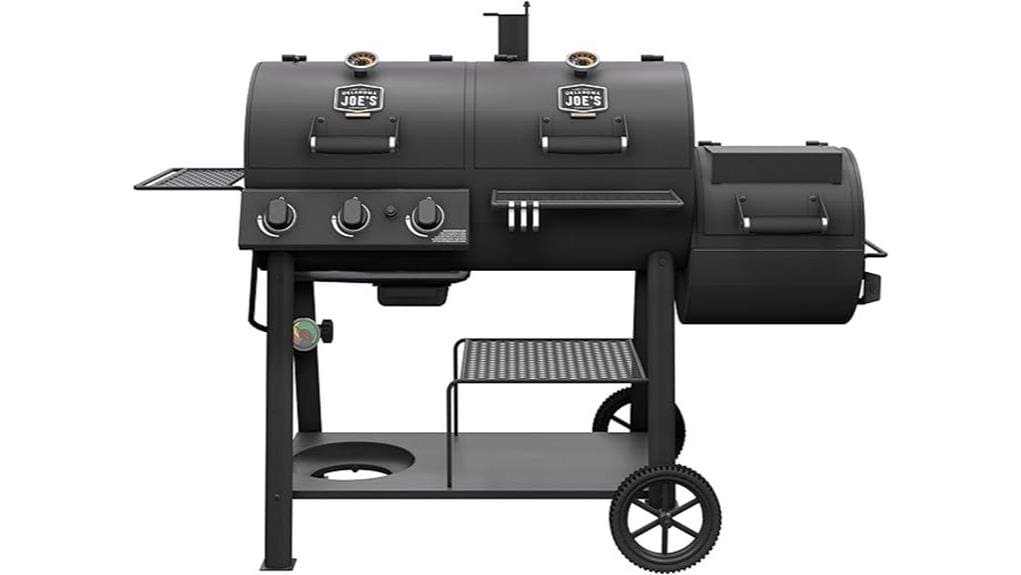
You’ll get a versatile cooker that combines a charcoal offset smoker and a 36,000 BTU propane grill so you can smoke low‑and‑slow, sear hot, or do hybrid smoke‑then‑sear workflows on one platform. Stainless construction, damper control, removable ash pan, and wagon wheels make it practical and durable. Fuel logistics require charcoal for smoking and propane for quick sears, and the 1,434 sq. in. capacity suits groups. Keep going to see detailed performance, control tips, and value tradeoffs.
Some Key Takeaways
- Combines a charcoal offset smoker and 36,000 BTU propane grill for versatile smoke-then-sear workflows.
- Solid stainless construction, large cooking area (1,434 sq. in.), and wagon wheels suit big gatherings.
- Precise temperature and smoke control via dampers, firebox placement, and removable ash pan for consistent low-and-slow results.
- Real-world performance: steady smoking for shoulders, rapid gas-side recovery for searing burgers and finishing meats.
- Requires charcoal/hardwood plus propane, offers a two-year parts warranty, and needs routine grease/ash maintenance.
Quick Verdict: Who This Canyon Combo DLX Is Best For
If you want a versatile backyard cooker that handles true low-and-slow smoking and high-heat grilling without buying two separate units, this Canyon Combo DLX fits the bill. You’ll appreciate its dual-fuel workflow: a charcoal smoker for controlled, long cooks and a 36,000 BTU gas grill for fast searing. Technical controls—adjustable dampers, ash pan, integrated fuel gauge—give repeatable results. Compared to single-purpose units, it saves space and budget for outdoor entertainers and tailgate chefs who want one reliable platform. You’ll join a practical community focused on performance, consistency, and efficient multirole cooking. As part of an assortment of products catering to gas-grill enthusiasts, this combo pairs well with outdoor grilling accessories and replacement parts.
What’s in the Box and Build Features That Matter (Materials, Wheels, Handles, Gauges)
Because setup and durable components determine long-term value, you’ll want to inspect the Canyon Combo DLX’s box contents and key build features as soon as it arrives. You’ll find assembly hardware, charcoal basket, extra grates, and a clear manual. The stainless construction feels substantial compared with thinner competitors, resisting rust and holding heat. Pivoting cool-touch handles and accessible ash pan simplify service. Two large rubber-treaded wagon wheels make movement easy across grass or gravel. Integrated propane fuel gauge, dampers, and sturdy shelf layout show practical attention to workflow. Parts and tools are grouped logically for faster assembly and confidence. Consider protecting your investment with a high-quality grill cover to extend the life of the unit and maintain performance, especially in outdoor environments.
Real-World Cooking Performance : Smoking, Grilling, and Combo Workflows
Frequently, you’ll find the Canyon Combo DLX handles three distinct workflows—low-and-slow smoking, direct high-heat grilling, and hybrid smoke-then-sear—with predictable, controllable results. You can run long cooks on the charcoal side, holding racks full of shoulders with steady smoke, while the gas side reaches searing temps quickly. Comparatively, the grill delivers even heat and rapid recovery for burgers or a reverse sear technique after smoke. Pay attention to wood chunk selection for consistent flavor transfer without overpowering. Workflow shifts are efficient: move meat from smoker to grill, finish, rest, and serve—repeatable for group cooks. Pellet grills also emphasize precise temperature control and consistency, which is a key advantage for those mastering outdoor cooking with pellet grill techniques.
Temperature, Smoke Control, and Cleanup : Dampers, Ash Pan, and Maintenance Tips
Moving from how the Canyon Combo DLX handles smoking and searing, you’ll find that precise temperature and smoke management comes down to damper settings, fuel placement, and routine ash removal. You’ll practice damper balancing between firebox and smokestack to dial low-and-slow or open for sear blasts; airflow tuning is subtle but repeatable once you note positions. Use the removable ash pan for clean ash disposal after each session to prevent airflow restriction. Schedule grease maintenance on trays and cookbox to avoid flare-ups. Comparatively, this combo gives predictable control you’ll rely on for consistent results. For those who enjoy grilling and outdoor cooking, consider keeping an ash bucket handy to make cleanup and ash disposal easier.
Value, Warranty, and Buying Considerations (Capacity, Fuel Needs, Price vs Alternatives)
How well does the Canyon Combo DLX fit your needs and budget? You get 1,434 sq. in. capacity—enough for large gatherings—so consider household size versus cooking cycles. Evaluate fuel logistics: charcoal and hardwood for low-and-slow, propane for quick sears; plan storage for both. The two-year parts warranty gives basic protection; factor serviceability into long term value and resale potential. At 191 lbs, seasonal storage and mobility matter—wheels help, but space is required. Compare price against single-purpose smokers or high-end combos; choose if versatility, capacity, and community cooking justify the upfront cost. Consider how tailgate grilling gear like tailgate grills complements both portability and social cooking events.
Some Questions Answered
Can I Convert the Gas Grill Burners to Natural Gas?
No — you can’t just swap the propane burners to natural gas without proper conversion parts and a regulator exchange. You’ll need orifices sized for natural gas, a certified regulator and hose, and possibly manifold modifications; that’s safer done by a qualified technician. Compared to buying a factory-natural-gas model, conversions risk leaks or poor performance if mismatched. You’ll belong to other owners who’ve had pros perform certified conversions for safety and warranty clarity.
Are Replacement Parts Readily Available Locally?
Yes — you can usually find replacements locally, though availability varies by part. You’ll get common items like grates, knobs, and ash pans at local retailers, while harder parts (burners, valves) show up more reliably on online marketplaces. Compare part numbers and prices, join local grilling groups for vendor tips, and keep the two-year warranty info handy. That collective resource makes sourcing parts easier and more consistent.
Does It Come Pre-Assembled or Require Extensive Assembly?
It ships partially assembled; you’ll finish outdoor setup and won’t need pro help. You’ll bolt wheels, shelves and firebox, align grates, then perform bolt tightening to spec. Compared with fully assembled units, it saves shipping damage but demands time and basic tools. You’ll appreciate the clear instructions and community tips if you want faster assembly, and you’ll feel part of a group that customizes and tunes their grill for peak performance.
Can the Smoker Box Be Used Independently Without the Gas Grill?
Yes — you can use the smoker box independently; it functions as a standalone charcoal smoker for portable smoking needs. You’ll control heat with its dampers and ash pan, and it performs comparably to dedicated offset fireboxes for low‑and‑slow cooks. Don’t use it indoors — indoor safety concerns (carbon monoxide, smoke) make outdoor operation mandatory. You’ll appreciate the practical mobility and shared community of cooks who favor combo versatility.
Is There a Recommended Seasoning or Break-In Procedure?
Yes — you should follow a seasoning method to break in the unit. You’ll heat the smoker box empty with charcoal and hardwood at 250–300°F for 2–3 hours, then wipe interior with a thin oil coat and repeat a low burn to set smoke profiles. Compare results after each burn; repeat until bitter factory residues fade. You’ll join a community of users who prefer this practical, technical, repeatable approach.