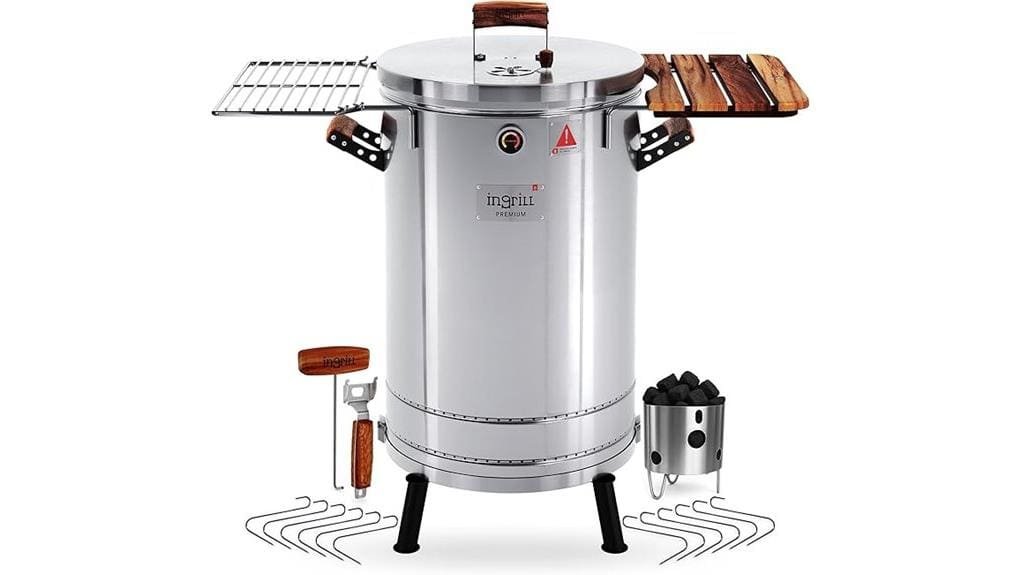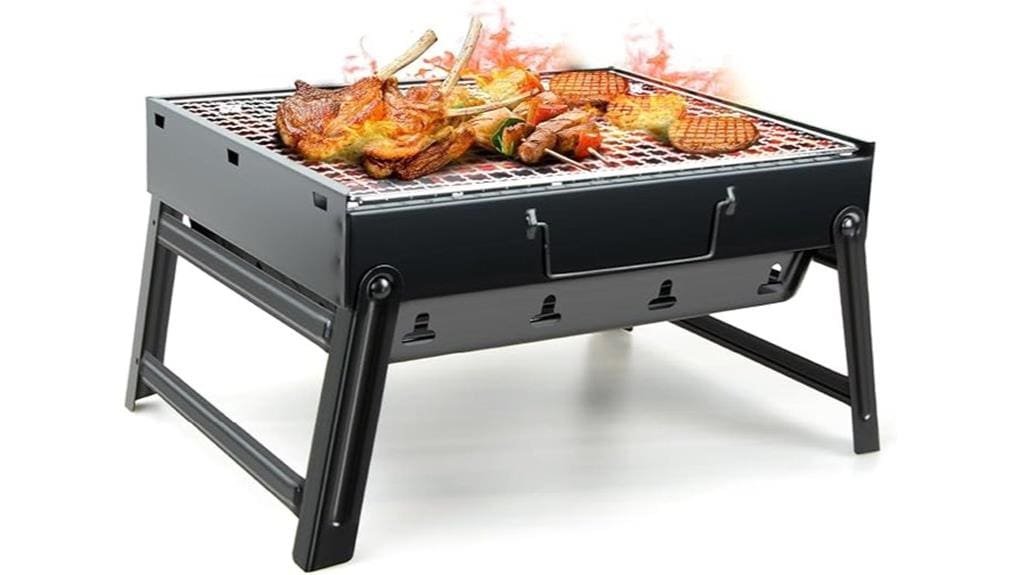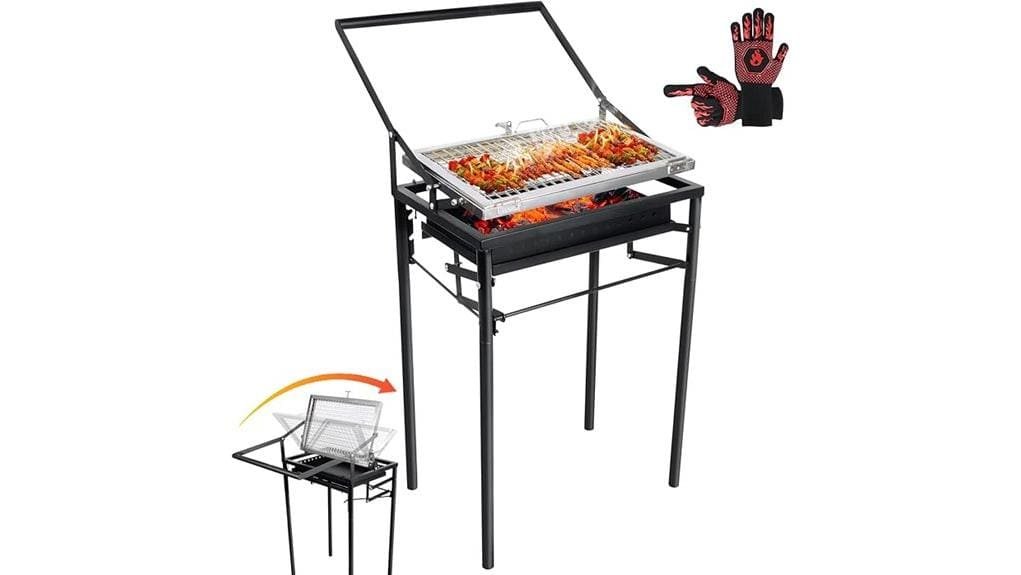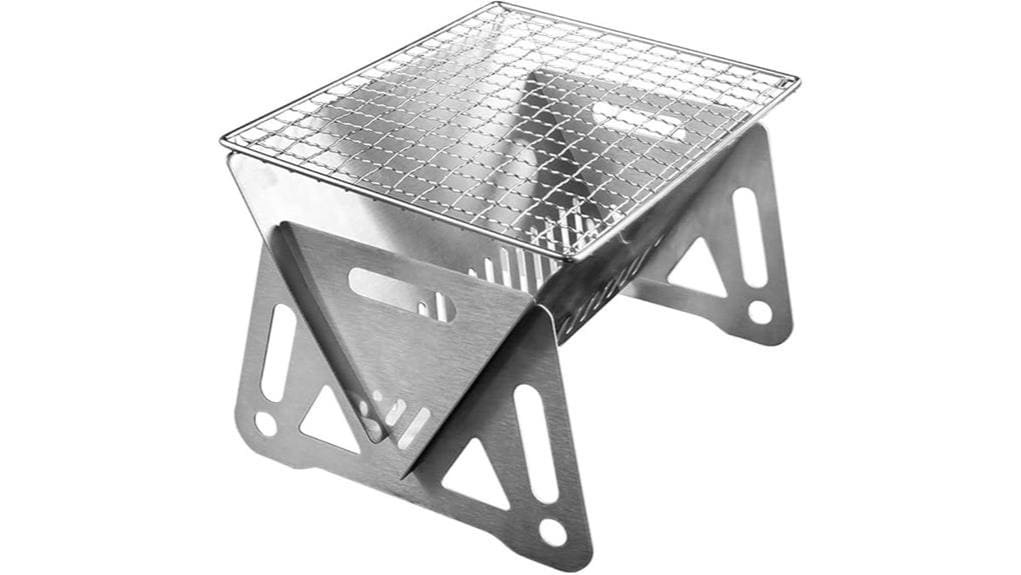
You want a compact stainless-steel charcoal grill that’s tough, heats reliably, and packs light for solo or two-person trips. Look for welded, deformation‑resistant panels, a sturdy grate, tool‑free five‑piece assembly, and vents that let you control the burn. Test for solid hinges, even heat, and quick ember catch on first fire. Prefer lump charcoal or small wood, clean parts while warm, and store dry. Keep going to see specific picks and field tips.
Some Key Takeaways
- Prioritize stainless-steel, deformation-resistant construction for rust resistance, heat durability, and long-term structural integrity.
- Match size and weight to use-case: backpacking needs ultra-light, fold-flat kits; car camping tolerates heavier, larger units.
- Verify stability and assembly: inspect welds, hinges, and a sturdy grate that handles cookware and uneven ground.
- Test burn performance: quick ignition, even heat distribution, controllable vents, and efficient ash catch for ember management.
- Maintain longevity by cleaning warm parts, disassembling quarterly, storing dry with a silica packet, and avoiding harsh abrasives.
How to Choose the Right Mini Portable Charcoal Grill for Travel and Camping
Pick a mini portable charcoal grill that matches how you camp and how long you want it to last: prioritize stainless-steel construction for anti-rust, heat- and scratch-resistance, and parts that resist deformation so the unit stays solid trip after trip. You’ll want a unit sized for 1–2 people that’s lightweight and fits a pack. Choose foldable design and compact fuel compatibility so you can carry charcoal or wood without bulk. Inspect tool-free assembly, a washable five-piece layout, and a sturdy grate that handles cookware. Favor durability over bells; freedom comes from gear that won’t fail on the trail. For reliable outdoor cooking, consider models from specialists in folding grills designed for travel and camping.
Best Mini Portable Charcoal Grills by Use Case (Backpacking, Car Camping, Tailgating)
When you’re choosing a mini portable charcoal grill for a specific use—backpacking, car camping, or tailgating—focus on weight and packability for trail miles, stability and fuel capacity for campsite cooking, and cooking surface plus sturdiness for crowded, repetitive tailgate use. For backpacking, pick a stainless steel, fold-flat unit that delivers backpacking flavor without extra ounces; compact, tool-free assembly and washable parts matter. For car camping, choose larger capacity, deformation-resistant builds that accept charcoal or wood and hold heat for slow cooks. For tailgating, prioritize a rugged grate, quick setup, and tailgating convenience that withstands heavy use. Consider also choosing models and accessories from reputable sellers of compact grills to ensure durability and parts availability, especially when you need replacement parts.
Quick Performance Checklist: What to Test Before You Buy or on First Use
Because a mini grill only proves itself under real use, run a short set of hands-on checks before you buy or on first setup to confirm build quality, stability, and performance. Check welds, hinges, and finish for sturdiness and corrosion resistance. Do a weight test to make sure it’s truly packable yet stable on uneven ground. Light a small fuel charge to verify ignition ease and note how quickly coals catch. Measure heat distribution with hand-hovering or an infrared reader; look for hot spots. Watch smoke output to gauge airflow and draft. Record findings; choose the unit that matches your freedom needs. Also consider how the grill performs with a charcoal chimney to speed ignition and improve consistent coal heating.
Step-by-Step Assembly, Safe Burning, and Cooking Tips for Small Stainless Grills
Although compact, these stainless mini grills assemble quickly and give you a sturdy, no-fuss cook surface—follow the parts order, confirm each joint seats snugly, and you’ll have a stable base that resists wobble and deformation. You’ll work through a simple folding sequence: lay the base, slot the side panels, insert the grate, then clip the ash tray. Use quality lump charcoal or small wood, light centrally, and control air by adjusting vents for steady burn. Practice ember management—bank coals for low heat, spread for sear. Cook confidently; the durable stainless tolerates heat and travel without compromise. For best results, pair the grill with proper ventilation to maintain consistent temperatures and reduce flare-ups.
Cleaning, Storage, and Longevity Hacks to Keep a Portable Grill Like New
If you want your mini stainless grill to stay like new, adopt a few disciplined cleaning, storage, and maintenance habits that focus on corrosion prevention and structural integrity. After each use scrub the grate and inner panels while warm, rinse under running water, dry thoroughly to prevent spots. Do a quarterly deep cleaning: disassemble the five parts, soak stubborn residue, inspect welds and edges. For seasonal storage pack it dry in its carry bag, add a silica packet, and keep it in a cool, ventilated spot. Replace warped parts promptly, avoid harsh abrasives, and you’ll extend function without sacrificing freedom. Perfect Picks for portable grilling adventures helps you choose gear that matches these care routines.
Some Questions Answered
Can I Use This Grill Indoors With Proper Ventilation?
No — you shouldn’t use this charcoal/wood-burning grill indoors even with ventilation requirements met. You’ll risk indoor air quality from CO and particulates; stainless steel durability and compact portability don’t change combustion hazards. For safe freedom, use it outdoors only, where smoke and fumes disperse. If you need indoor cooking, choose an electric or properly vented, certified indoor stove instead to protect health and avoid carbon monoxide buildup.
Are Replacement Parts Available From the Manufacturer?
Yes — you can check manufacturer availability for spare components. You’ll find the maker usually offers replacement parts for the stainless steel pieces, hinges, grate and carrying bag. You’ll want to confirm specific part numbers before ordering so repairs stay simple and durable. If the manufacturer doesn’t list a part, you can source compatible stainless replacements. That keeps your compact, travel-ready unit functioning and freedom-focused for years.
Does the Grill Ship With Any Warranty or Guarantee?
Yes — it ships with a limited warranty; you’ll get a warranty duration stated in the paperwork and online. Check the service policy for repair or replacement steps; they usually cover defects for a set period. You’ll appreciate the straightforward, hands-on coverage that protects the stainless steel build and foldable parts. Carry-on freedom’s preserved: follow simple maintenance instructions and you’ll avoid most service claims while staying ready to travel.
Can I Cook Directly on the Grill With Acidic Foods?
Yes — you can cook directly on the grill with acidic marinades, but don’t overdo it. You’ll get good flavor, and the stainless steel holds up, resisting corrosion and deformation. Still, prolonged exposure to very acidic foods can accelerate wear and risk enamel damage on any coated parts or cookware you place on the grate. Rinse and clean promptly; quick disassembly and washing will preserve durability and keep your freedom to roam cooking intact.
Is the Carry Bag Machine Washable?
Yes — the carry bag’s fabric care lets you machine wash it on a gentle cycle. You’ll find washing instructions on the tag; treat stains promptly and use mild detergent. The removable liner (if equipped) is machine safe too, so you can separate heavier dirt from the outer shell. You’ll appreciate the hands-on durability: sturdy seams and abrasion-resistant fabric stand up to travel, giving you freedom to get out and grill.