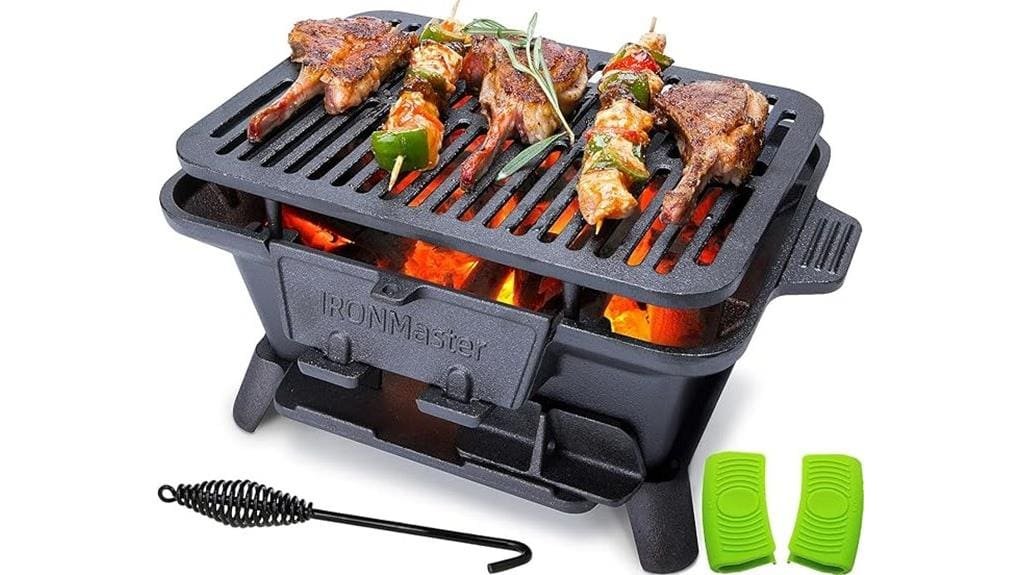
You’ll get a rugged, all–cast-iron hibachi that’s built for hands-on charcoal cooking for two, not partying. It’s heavy but steady, with thick grates, two grate heights, and a side coal door for swapping coals without losing heat. You’ll control temperature with the draft door and coal placement, then oil and dry it after use to prevent rust. If you want focused searing and learning craft over convenience, keep going to see why it fits small, serious cooks.
Some Key Takeaways
- Solid all–cast-iron build (20 lb) offers exceptional heat retention and durability for outdoor hibachi cooking.
- Compact footprint and two grate heights suit focused two-person grilling, searing, and small gatherings.
- Adjustable draft door and removable coal side door provide intuitive temperature control and easy coal management.
- Requires regular cleaning, drying, and light oiling to prevent rust, and ash removal to protect the cast iron.
- Not for large groups—best for cooks who prioritize hands-on charcoal technique and long-term ruggedness.
What the IronMaster Hibachi Grill Is and Who It’s Best For
Think of the IronMaster Hibachi as a compact, no-frills cast-iron charcoal grill built for hands-on cooking for two; it’s a Japanese-style hibachi that puts heat control and durability ahead of frills. You’ll find it ideal when you want focused, ritualized grilling—perfect for small gatherings or a shared meal on a balcony or campsite. Compared with larger grills, it’s intentionally minimalist: you control heat directly, tend coals, and adjust height for varied searing. If you value connection, learning craft, and portable cooking that invites close conversation, this grill fits you—just don’t expect to feed a crowd. It’s a great option for those who enjoy outdoor cooking and want a simple, durable charcoal setup.
Key Specs and Build: Cast-Iron Construction, Size, Weight, and Finish
Because the IronMaster sticks to classic materials and a compact footprint, you get a dense, all–cast-iron build that feels substantial for its 20‑pound mass and measures just 14.8 x 9.5 x 7.25 inches—small enough for a tabletop or backpacked to camp, but heavy enough to anchor steady heat. You’ll notice heavy duty castiron throughout: thick grates, solid body, pre-seasoned finish that resists sticking when cared for. Compared to thin steel backpack grills, this one trades weight for longevity and heat stability. It’s a compact tabletop choice that fits duo outings and invites a small group to share durable, familiar gear. Perfect for outdoor cooks who value cast iron skillets and rugged gear, it pairs well with essential cast iron accessories for grilling and campfire cooking.
Heat Performance and Temperature Control in Real Use
Fire it up and you’ll notice the cast iron’s superior heat retention right away: it soaks up charcoal heat and radiates it evenly, giving you steady searing temperatures and minimal hot spots. You’ll control temps by using the adjustable draft door—airflow modulation is intuitive, so you can coax low-and-slow embers or ramp up for quick sears. Two grate heights add flexibility; compare it to thin-steel grills and you’ll feel the difference in consistent crust formation. For two people, you get reliable even heatzones across the small surface, making shared meals predictable and satisfying every time. The Ironmaster’s accessory options complement this performance, offering kamado grill accessories that enhance versatility and convenience.
Charcoal Handling, Maintenance, and Rust Prevention Tips
When you’re working with charcoal in the IronMaster Hibachi, plan your fuel layout and ash management before you light up so you can keep steady heat and avoid unnecessary handling mid-cook. You’ll load small, even piles through the side coal door to maintain airflow and swap coals without lifting the grate. Empty ash promptly—wet ash accelerates corrosion. For storage, use airtight containers and keep charcoal dry; good charcoal storage prevents moisture-related rust. After each cook, brush, dry thoroughly, then apply a thin oil layer. Compare light oil rubs to commercial rust inhibitors; both build community-tested protection. Also consider using a charcoal chimney to get coals evenly lit and reduce starter fluid use.
Is It Worth Buying? Pros, Cons, and Who Should Choose It
If you want a compact, durable charcoal hibachi that delivers restaurant-style heat for two, the IronMaster is worth serious consideration. You’ll appreciate its cast-iron build, adjustable draft and side coal door for hands-on control. Pros: excellent heat retention, simple portable storage, and intense sear for superior flavor comparison against larger grills. Cons: 20 lb weight limits ultra-portability, small capacity won’t suit groups, and it needs regular oiling to avoid rust. Choose it if you want a reliable two-person grill, value craftsmanship, and enjoy active charcoal cooking with a welcoming community of small-grill enthusiasts. It also pairs well with essential portable grill accessories like compact tools and carry cases.
Some Questions Answered
Does It Come With a Cooking Grate or Accessories Included?
Yes — it includes a cooking grate, so you can start grilling right away. You’ll appreciate the cast-iron grate’s heat retention and how it pairs with the grill’s accessory compatibility for add-ons like griddles or skewers. You’ll find it practical, hands-on, and comparable to similarly sized hibachis, and you’ll feel part of a community that values compact, durable gear. Keep accessories season-ready with regular cleaning and oiling.
Can It Be Used With Gas or Only Charcoal?
Only charcoal — it’s built for charcoal heat, not gas, so you won’t get an out‑of‑the‑box gas conversion or propane adapter. If you’re hands‑on and comfortable modifying gear, some users explore custom conversions, but that voids warranties and can be risky. You’ll enjoy superior cast‑iron heat and control with charcoal; if you’d rather use gas reliably and safely, pick a grill designed for propane or with approved gas conversion options.
Is It Safe to Use on Wooden or Plastic Surfaces?
No — you shouldn’t place it directly on wooden or plastic surfaces. Its cast iron construction causes significant heat transfer that can scorch, warp, or cause surface damage. Use a heat-resistant pad, metal trivet, or sturdy table rated for grills to protect surfaces. Compared to gas grills with insulated bases, this hibachi transfers more heat; treating it like a high-heat cookware piece keeps you and your space safe and included in responsible grilling.
Can the Cast Iron Be Seasoned at Home Before First Use?
Yes — you can season the cast iron at home. Use pre seasoning techniques like cleaning, drying, then applying a thin layer of oil; compare oil selection between flaxseed, grapeseed, or vegetable oil for high smoke point and durability. You’ll bake it upside down at 450–500°F for an hour, cool, and repeat 2–3 times. You’ll feel part of a community preserving cookware traditions while building a long-lasting, nonstick surface.
Are Replacement Parts or Spare Grills Available for Purchase?
Yes — replacement availability exists for common parts and spare grills through the manufacturer or authorized dealers, and you’ll want to check warranty coverage before buying. You’ll find parts like grates, draft doors, and coal doors sold separately, which lets you repair rather than replace. You’ll feel confident joining others who maintain theirs; compare sources, confirm part fit, and lean on warranty terms to protect your purchase and prolong ownership.