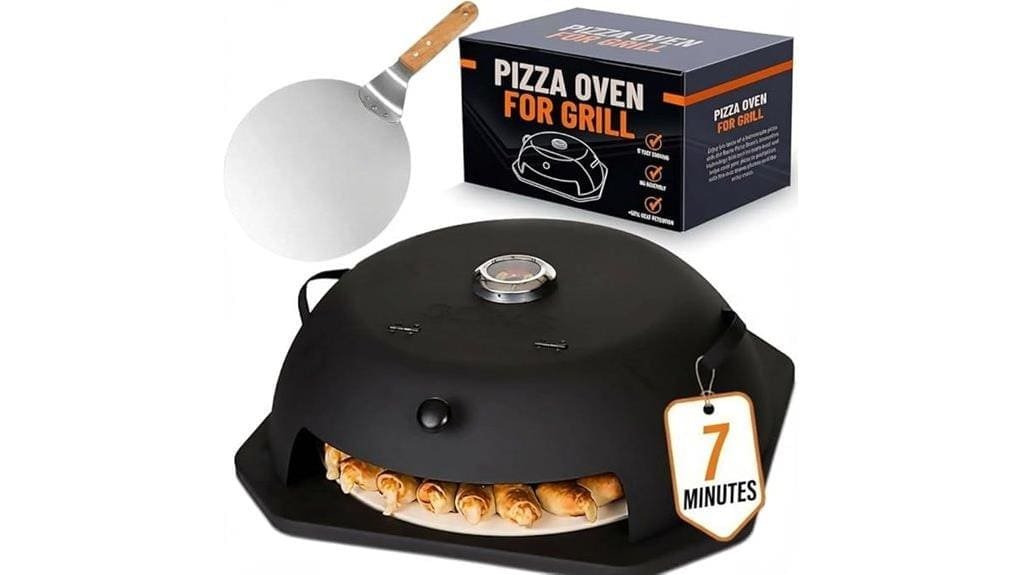
You’ll get restaurant-style, high-heat pizza from your grill with the HeatGuard Pro Geras, a compact ceramic-stone oven that converts gas, charcoal, and pellet grills into efficient pizza stations. It’s aimed at social cooks who want crisp, blistered crusts and evenly browned toppings without fancy skills. Setup’s tool-free and portable; the stone and aluminum peel work well though the stone needs reheat between bakes. If you want more on fit, performance, and value, keep going for specifics.
Some Key Takeaways
- Converts most gas, charcoal, and pellet grills into a high-heat pizza oven for restaurant-style results.
- Ceramic stone and dome retain heat for fast bakes, even browning, and blistered crusts.
- Easy tool-free setup: slides onto grates, aligns with grill access, and includes peel and recipe guide.
- Lightweight aluminum peel and sturdy stone balance portability with heat stability between bakes.
- Good value for social cooks seeking crisp, professional pizzas, though long-term durability is still unproven.
What the HeatGuard Pro Geras Pizza Oven Is and Who It’s For
Think of the HeatGuard Pro Geras as a grill-top pizza oven that turns your backyard grill into a high-heat, restaurant-style pizza station. You get a compact unit with a ceramic stone and peel that fits most gas, charcoal, pellet grills — so outdoor portability feels realistic for camping or tailgates. You’ll appreciate fast heat retention and even baking that yields crisp crusts and browned cheese. It’s aimed at social cooks who want reliable, shareable results; the included recipe booklet and beginner friendly FAQs help you and friends learn quickly. Overall, it’s practical, inclusive, and performance-focused. It’s a great match for anyone who enjoys outdoor cooking and grilling and wants to experiment with plank and grill-based techniques grill planks.
How Setup Works: Installing the HeatGuard Pro on Gas, Charcoal, and Pellet Grills
When you’re ready to set up the HeatGuard Pro on a gas, charcoal, or pellet grill, the process is straightforward and mostly hands-off: place the oven body over the grill grates, slide the ceramic stone into its cradle, and align the front opening with your grill’s access point. You’ll check fit for common models, ensuring proper grill ventilation and maintaining recommended safety clearance from flammable surfaces. For gas, position above burners; for charcoal, center over coals; for pellets, align with the heat zone. No tools are required. The included peel and booklet help you feel confident and supported during setup. This setup is ideal for RV users who enjoy outdoor cooking and need compact, portable solutions like RV grilling gear that fit a variety of grills.
Cooking Performance: Heat Retention, Stone Results, and Pizza Quality
Usually you’ll notice the HeatGuard Pro’s heat-retention tech kicks in almost immediately, allowing the chamber to reach and hold higher, more consistent temperatures than an open grill alone. You’ll appreciate the high temp retention: it shortens bake times and browns toppings evenly. The ceramic stone delivers uniform conductance; it stabilizes surface heat so your crust cooks through without burning. Steam absorption dynamics are effective — the stone wicks moisture for a tender crumb while the dome promotes crisping. Results feel reliably restaurant-grade: blistered edges, melted cheese, and a light interior. You’ll feel confident sharing these pizzas with friends. This accessory is a great match for outdoor grilling enthusiasts who use pizza stones and related tools.
Included Accessories and Ease of Use: Stone, Peel, and Recipe Guide Tested
The strong heat retention and even baking set expectations for the accessories, and the HeatGuard Pro mostly delivers: the included ceramic stone heats quickly, spreads surface heat uniformly, and wicks steam so dough cooks through without sogginess; it’s hefty enough to hold temperature between bakes but needs a few extra minutes to reheat for consecutive pizzas. The aluminum peel is lightweight, slides well, and resists warp; experienced users and user feedback note its thin edge helps launches. The recipe booklet is practical, approachable, and builds confidence. Together they make setup simple; questions about long term durability remain, but early impressions are positive. This gear fits well within the broader world of outdoor cooking, where choosing the right griddle gear can make a meaningful difference in results.
Value and Fit: Compatibility, Pricing Considerations, and Final Recommendation
Because the HeatGuard Pro is built to sit over a wide range of grill types, you’ll find it fits most common setups—from Weber and Napoleon gas grills to charcoal kettles and larger pellet or kamado units like the Big Green Egg—so compatibility won’t be the limiting factor for most buyers. You’ll want to do simple fit testing for side clearance and lid closure, but most users report straightforward placement. Pricing tiers match features: base kit includes stone and peel; upgraded bundles add extras. For value, you’re buying durable heat-retention performance and restaurant-style results—worthwhile if you host friends or want consistent outdoor pizza. Many customers mount the HeatGuard Pro on existing setups using standard rail-mounted grills for secure placement and easy removal.
Some Questions Answered
Can I Use the Oven Indoors With a Stovetop or Range Hood?
No — you shouldn’t use it indoors with a stovetop or range hood. The oven’s design and fuel compatibility create indoor safety risks and it needs outdoor-only ventilation requirements to disperse heat and combustion byproducts. If you want indoor pizza, choose a countertop electric pizza oven rated for indoor use. You’ll stay safer and keep your household included in cooking without risking poor ventilation, smoke, or carbon monoxide buildup.
Is the Ceramic Stone Dishwasher-Safe or How to Clean It?
No, you shouldn’t put the ceramic stone in the dishwasher. For proper ceramic maintenance, let the stone cool fully, scrape off residue with a bench scraper, then wipe with a damp cloth; never soak or use soap. For stain removal, make a paste of baking soda and water, rub gently, rinse, and air-dry. You’ll protect the stone’s heat properties and join other users who keep their stones performing like pros.
Does the Oven Come With a Warranty or Customer Support Contact?
Yes — you get a limited warranty; the warranty duration is typically one year, and it covers manufacturing defects. If something’s wrong, you’ll reach support via email and phone; those support channels are listed with the product. You’ll feel supported as they guide replacements or troubleshooting. Keep your receipt and serial information handy, and contact support promptly to expedite claims; they’ll help you get back to cooking with confidence.
Can I Bake Non-Pizza Items Like Bread or Desserts?
Yes — you can bake non-pizza items like bread and desserts. You’ll get reliable bread baking results thanks to the oven’s heat-retention and ceramic stone, which create steam absorption for a soft crumb and crisp crust. Dessert versatility is strong for items needing even browning — tarts, fruit galettes, cookies. You’ll want to monitor temps and times closely, but you’ll feel confident sharing freshly baked goods with friends.
What Are the Oven’s Exterior Temperatures During Operation?
You’ll see exterior surface temps ranging from about 200–400°F during operation, depending on grill fuel and set temp, with hotter hotspots near the dome and cooler areas at vents. You’ll notice consistent heat distribution overall: the oven’s design channels heat so cooking zones stay predictable. You’ll want oven mitts and keep kids back; those surface temps can burn. You’ll appreciate the reliable, restaurant-style results it helps you achieve.