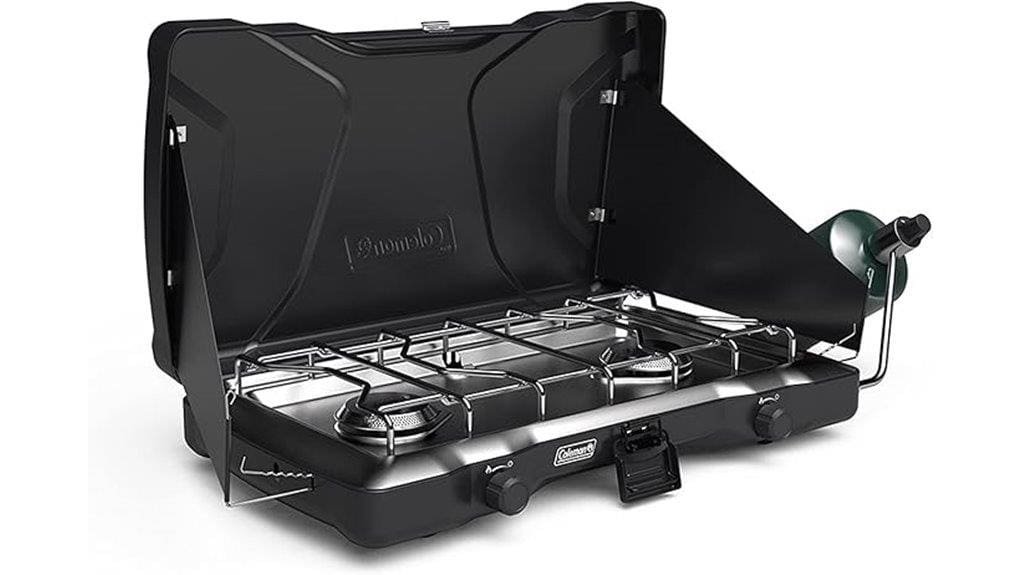
If you want a simple, reliable two-burner propane stove for camping or tailgating, the Coleman Triton is a solid pick. You’ll get 22,000 BTU total with independent controls, quick ignition, and even heat for searing or low simmers. It fits 10–12″ pans, runs on a standard 16 oz cylinder, and packs up light with folding legs and wind guards. It’s affordable and durable, and keep going to see how it performs in real use.
Some Key Takeaways
- Two independently adjustable burners deliver a combined 22,000 BTU for quick boils and reliable cooking control.
- Fits 10–12″ pans, handling meals for two to four campers or tailgaters comfortably.
- Push-button ignition and improved knob rotation provide consistent starts and precise flame control.
- Lightweight (~5 lb) with folding legs, heavy-duty latch, and wind guards for easy transport and campsite stability.
- Chrome-plated grates and removable parts simplify cleanup; runs about one hour on high from a standard 16 oz propane cylinder.
Quick Verdict: Is the Coleman Triton 2-Burner Propane Stove Worth It?
While it won’t replace a full kitchen, the Coleman Triton 2-Burner gives you reliable, portable cooking with solid heat and easy control—22,000 BTU total, two independently adjustable burners, and improved knobs for precise simmering. You’ll find it’s a dependable camping essentials item that handles dinners for two to four without fuss. It’s light, packs up securely, and feels like a sensible budget pick up when you want performance without splurging. You’ll appreciate predictable flames, simple cleanup, and durable build. If you want community-ready meals and straightforward gear, this stove earns a clear, practical recommendation. It’s an excellent choice for fans of portable propane grills who need compact, reliable outdoor cooking gear.
Specs and Features With Real Performance Numbers
Because you’ll want numbers as much as features, here’s what the Triton actually delivers: two independently adjustable burners combine for 22,000 BTU total (roughly 11,000 BTU per burner at max), fit 10–12″ pans comfortably, and run off a standard 16 oz propane cylinder that gives about an hour on high for a single burner. You’ll appreciate clear BTU distribution across burners, improved knob rotation for precise temp control, and chrome-plated grates that clean up fast. Two wind guards and a heavy-duty latch add durability. Ignition reliability is solid—push-button starts consistently—so you and your group can count on it. This stove pairs well with common propane tanks used for outdoor cooking.
How It Cooks: Heat, Simmering, Wind Protection, and Fuel Runtime
When you fire up the Triton, you get immediate, controllable heat—each burner delivers roughly 11,000 BTU at max so pots come to boil quickly and you can drop down to a steady simmer without hunting for the right dial position. You’ll notice even heat across the grate, so sauces don’t scorch and sears are consistent. Improved flame control gives predictable low settings for delicate tasks. Two folding wind guards make it portable windproof for most campsites, and a standard 16 oz propane cylinder yields about an hour burn time on high per burner—enough for shared meals and dependable service. For safe, reliable outdoor cooking, pair the stove with quality RV propane hoses designed for camping and grilling propane hoses.
Portability, Setup, Cleaning, and Durability in Real Use
Take it out, latch it closed, and you’ll see why the Triton is designed for easy transport and quick setup. You’ll appreciate the lightweight carryability—at about 5 pounds it’s easy to shoulder to camp or a tailgate. Clip the heavy-duty latch, unfold the legs, attach a 16 oz. cylinder and you’re cooking fast; the wind guards and improved knobs make ignition and simmering predictable. Post trip cleaning is straightforward: lift the chrome-plated grate, wipe spills, and rinse removable parts. Alloy steel and chrome plating give visible rust resistance; with basic care this stove stays dependable for seasons of shared meals. These compact propane grills are ideal for outdoor cooking thanks to their portability and simple operation, making them perfect for camping and tailgating with compact propane grills.
Who Should Buy This Stove and How It Compares to Alternatives
After you’ve lugged it to camp, set it up, and cleaned it a few times, you’ll get a clear sense of who this Triton suits. You should buy it if you’re a camping couple, a small-family camper, or someone who hosts tailgate parties and wants reliable, two-burner cooking without bulk. It’s lighter and simpler than built-in grill stations, more powerful than single-burner backpack stoves, and cheaper than full camp ranges. You’ll appreciate the 22,000 BTUs, wind guards, and easy controls. If you need larger capacity or long-run multi-day use, consider bigger propane ranges or dual-propane systems instead. Also consider choosing an appropriate RV propane regulator to ensure safe, consistent fuel delivery for your outdoor cooking.
Some Questions Answered
Can This Stove Be Used With a Remote Propane Hose and Larger Tank?
Yes — you can use a remote propane hose and larger tank, but you’ll need proper hose adapters and should do pressure testing before use. You’ll want a regulator rated for the larger cylinder that matches the stove’s 22,000 BTU demand and a secure adapter to the stove’s 1-lb cylinder fitting. You’ll feel safer sharing gear when you inspect fittings, test for leaks, and confirm stable pressure during cooking.
Are Replacement Parts Like Knobs and Grates Available Separately?
Yes — you can get replacement knobs and grate replacements separately. You’ll want to check Coleman’s parts store or authorized dealers for OEM replacement knobs; aftermarket options exist too. Order the chrome-plated removable grate as a grate replacement if it’s damaged. Keep your model number handy (Triton 2157352) so you and others in the community can match parts quickly, and enjoy hassle-free repairs with your group’s guidance.
Is It Safe to Use Inside a Well-Ventilated Tent or RV?
No, you shouldn’t use it inside a tent or RV even with ventilation; it produces carbon monoxide and poses fire risk. You’ll stay safer running it outdoors with good ventilation placement away from flammable materials and wind that blows into your shelter. If you must cook inside a shelter, use only appliances rated for indoor use with CO detectors, adequate airflow, and a safe distance from occupants so everyone can relax together.
Does the Stove Include a Regulator or Adapter for Foreign LPG Canisters?
No — it doesn’t include regulators for foreign fittings or international adapters. You’ll need to bring or buy the correct regulator/adapter for local LPG canisters when traveling. Choose a certified, compatible adapter and check thread types and pressure ratings before connecting. Join fellow outdoor cooks in using a proper seal, leak-testing connections, and carrying spare O-rings. That keeps you safe, confident, and ready to cook wherever you go.
Can I Cook Directly on the Grate Without Cookware Damage?
You can, but it’s not ideal—you’ll risk food sticking and grate damage over time. Seasoning techniques (oil the grate, heat it until smoking, repeat) will help create a nonstick layer and improve heat distribution. Use moderate heat, avoid acidic foods that strip seasoning, and clean gently after cooling. That said, you’ll get better, safer results using proper cookware; the grate’s best role is as a sturdy support for pots and pans.