You’ll get a rugged, travel-ready cast‑iron hibachi that sears at 700–800°F and also doubles as a tabletop heat source, so you can cook and warm a small group on camping trips, balconies, or tailgates. It’s heavier and more durable than thin-sheet portables, with two-piece grates, a draft door, quick seasoning, and fast heat recovery for reliable sears. Capacity’s limited and charcoal skill helps, but keep going and you’ll find detailed pros, cons, and alternatives.
Some Key Takeaways
- Compact cast‑iron design delivers durable, portable grilling and doubles as a tabletop heat source for campsites or balconies.
- Excellent 700–800°F searing performance with superior heat retention compared with thin‑sheet portable grills.
- Two‑piece nested grates and draft door allow quick sears, variable cooking heights, and airflow control for embers.
- Weighs about 7 pounds, seasons like standard cast iron, and packs compactly for travel.
- Best for small‑group high‑heat cooking; limited capacity and requires charcoal skill and possible venue checks.
What This 2‑In‑1 Hibachi Is and Who It’s For
Think of this 2‑in‑1 hibachi as a compact, portable cast‑iron grill that doubles as a tabletop heat source — it’s a straightforward, no‑frills cooker built for precise, high‑heat searing and small‑scale roasting. You’ll appreciate the compact design if you want gear that won’t chain you to a backyard; it’s made to travel to campsites, balconies, or picnics. Setup’s beginner friendly setup: two-piece grates, simple draft door, and clear adjustments let you control intensity without fuss. Compared to bulky grills, it trades capacity for speed and freedom, giving you accurate heat and rugged reliability in a lightweight package. This makes it a great choice for anyone who values lightweight grills and easy outdoor cooking.
Cast‑Iron Build, Weight, and Portability Tested
Built entirely from 100% cast iron, this hibachi feels noticeably solid without being cumbersome — at 7 pounds it’s light enough to toss in a car trunk or carry to a campsite, yet heavy enough to stay steady on a picnic table. You’ll notice the smooth surface develops seasoning quickly, so minimal cast iron care—clean, dry, oil—keeps it nonstick and rust-free. The two-piece grates nest for compact storage, and the draft door adds control without extra parts. Compared with thin-steel portables, it’s more durable and offers superior travel convenience while still fitting freedom-minded packing routines. Cast iron’s durability and heat retention also make it an ideal choice for outdoor cooks who value long-lasting cookware.
Heat Performance : How It Holds 700–800°F and Cooks Real Food
Push a lit chimney of charcoal into the hibachi and you’ll quickly feel how efficiently the cast iron holds and radiates heat — once it’s up to temp this little grill sustains roughly 700–800°F for long stretches, thanks to the mass and low thermal loss of 100% cast iron. You’ll notice superior thermal retention compared with thin-sheet grills: searing is fast, flare-ups are fewer, and the surface recovers heat between flips. That cooking consistency lets you roast vegetables or char steaks without constant babysitting. For camping freedom, this compact hibachi delivers predictable, restaurant-level heat control in a portable package. This makes charcoal chimneys an ideal accessory for getting coals hot quickly and evenly on cast-iron grills, improving start-up reliability and heat retention.
Two‑Piece Grates, Draft Door, and Practical Features in Use
While the two-piece grates and adjustable draft door might look simple, they give you precise control over heat and cooking height: set the higher grate for quick sears and the lower for gentler roasting, or remove one grate to drop pans closer to the coals. You’ll appreciate grate maintenance that’s straightforward — wipe, re-season, and swap pieces quickly. The draft door delivers reliable airflow optimization, letting you open for blaze or close for steady embers. Compared to single-grate minis, this setup offers greater versatility and freedom: cook fast, slow, or somewhere between without extra accessories or complex adjustments. For many outdoor cooks, upgrading to dedicated grill grates is the simplest way to improve searing, heat retention, and long-term durability.
When to Buy This Hibachi (Use Cases, Pros, Cons, and Alternatives)
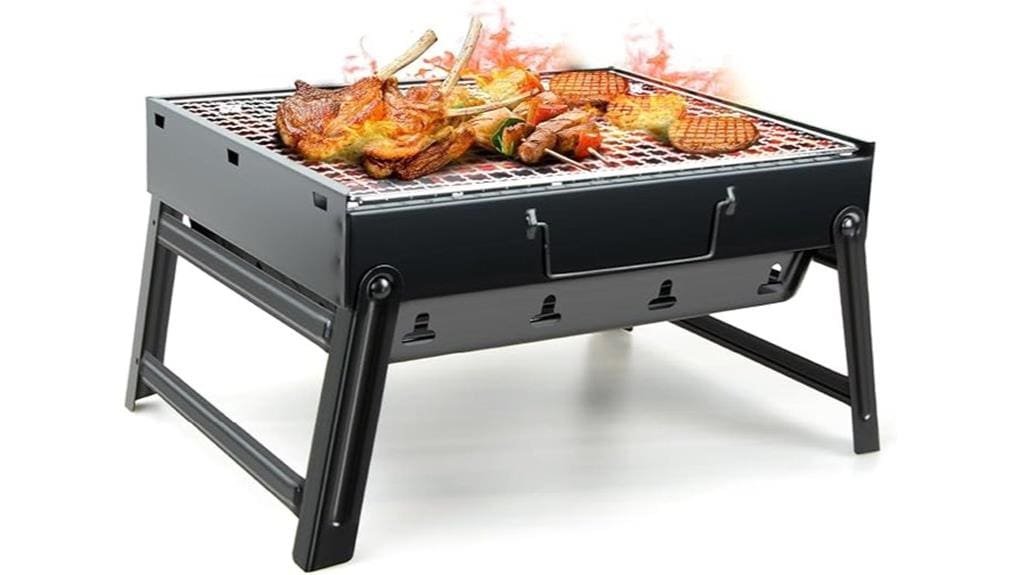
If you want a compact, tough grill that gives you precise temperature control without hauling a full-size unit, this cast-iron hibachi is a strong pick for camping, balcony grilling, tailgates, or small-backyard cooks. You’ll buy it when you prioritize portability, durability, and high heat — its 7-pound cast iron, two grate positions, and draft door deliver that. Pros: reliable 700–800°F, table-safe grate pads, smores grate option. Cons: limited capacity, requires charcoal skill, check balcony regulations and local fire rules. Alternatives: larger kettle grills for groups, propane tabletop units for stricter sites during camping tailgating. For those who value easy storage and transport, consider portable folding grills that combine compactness with sturdy construction like this unit’s design folding grills.
Some Questions Answered
Is Any Seasoning Required Before First Use?
No, you don’t strictly need pre seasoning, but many join the pre seasoning debate. Since it’s 100% cast iron, you can use seasoning alternatives: heat a layer of oil over charcoal or use a commercial pre-seasoned spray. For best results, heat, oil, and cook fatty foods to build a patina. You’ll gain better nonstick performance and corrosion protection, yet you’re free to skip or adopt whatever method suits your routine.
Can It Be Used on a Wooden Table Safely?
Yes — you can use it on a wooden table safely if you take precautions. You’ll appreciate its portable safety when you place the grill’s grates as heat shields and use the lower grate pad as a barrier. Compare using a metal tray, heat-resistant mat, or concrete paver underneath versus nothing; the shielded options prevent scorching. You’ll want airflow control and distance from edges, and you’ll never compromise freedom to cook outdoors.
How Do You Clean Ash and Residue?
You clean ash and residue by letting coals fully cool, then dumping ashes into a metal container for safe charcoal maintenance and ash disposal. Scrape grates with a stiff brush, remove loose crumb and wipe with a damp cloth; for stubborn buildup, heat briefly to loosen, then scrape. Compare scraping methods: wire brush is aggressive, nylon pads gentler. You’ll preserve seasoning by avoiding harsh detergents and drying thoroughly.
Are Replacement Grates or Parts Available?
Yes — replacement grates and spare knobs are available from the manufacturer and third-party sellers, so you can keep cooking without downtime. You’ll find identical cast-iron grates, high/low-level sets, and occasional smores-maker pieces; OEM parts match fit and finish better than generics. Buy spares if you travel often, and compare prices, lead times, and return policies so you retain freedom to repair or upgrade on your schedule.
Does Cast Iron Emit Odor When New?
Yes — new cast iron can give off a faint seasoning smell or manufacturing residue odor until you clean and cure it. You’ll want to wash, dry, then heat with oil to burn off residues and build a protective seasoning layer. Compared to coated grills, cast iron’s scent fades after several heat cycles and proper seasoning, and you’ll enjoy more neutral, freedom-friendly cooking aromas once the patina’s established.