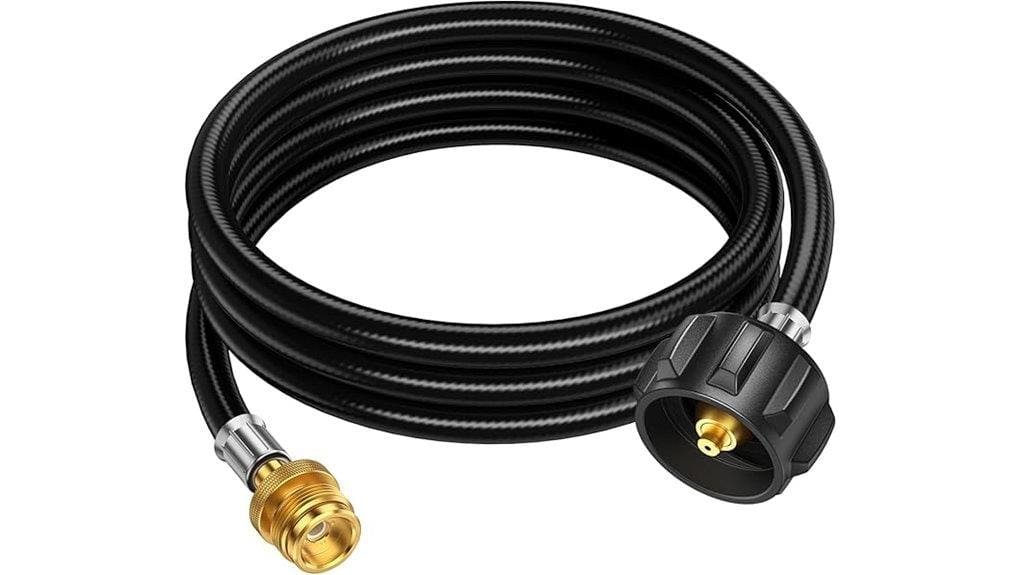
You’ll get an 8 ft QCC1-to-CGA600 hose that lets you run 1 lb-cylinder appliances from 20–40 lb tanks for much longer sessions. It uses hand-tightened brass fittings, weather-resistant PVC with braided reinforcement, and CSA-checked construction to minimize leaks and pressure drop. Installation is straightforward: attach QCC1 to the tank, route hose kink-free, hand-tighten the CGA600 to the appliance, and leak-test with soapy water. Keep spare O-rings and a regulator check on your maintenance list if you want full setup guidance.
Some Key Takeaways
- Connects 20–40 lb QCC1/Type 1 tanks to 1 lb CGA600 appliances for much longer run time than disposable cylinders.
- Heavy-duty brass fittings and weather-resistant PVC hose provide durable, outdoor-ready performance and minimal pressure drop.
- Hand-tighten brass interfaces; avoid tools to preserve seals and follow soapy-water leak checks after slowly opening the tank valve.
- CSA certification and recommended regulator checks ensure safety; inspect O-rings, threads, and hose for cracks regularly.
- Best for prolonged grilling, camping, or tailgating when centralized fuel and lower cost per hour outweigh added hose management.
How This 8 Ft Propane Hose Adapter Works and Which Appliances It Fits
Hook this 8 ft propane hose adapter between your 5–40 lb tank and 1 lb-cylinder appliances to run longer without swapping canisters; it uses a QCC1/Type 1 fitting for the tank and a CGA600 connection for devices originally designed for 1 lb LP bottles, providing a sealed, hand-tighten brass interface and weather-resistant PVC hose so you can safely power Weber Q grills, Coleman camping stoves, Blackstone 17/22 griddles (with a regulator where required), and Buddy heaters while keeping the bulky tank at a safe distance. You’ll monitor propane flow rate and observe steady delivery; brass fittings minimize pressure drop. Check connection torque by hand; avoid tools to preserve seals. This setup suits shared outdoor use, camping, and tailgates, giving reliable performance and community-minded convenience. Choose a regulator matched to your appliance and tank size to ensure safe, consistent pressure RV propane regulators.
Real-World Setup: Installing the QCC1 to CGA600 Hose With Grills, Stoves, Griddles, and Heaters
Now that you know how the adapter functions and which appliances it serves, here’s how to install and verify a safe, effective connection in the field. You’ll position the 20–40 lb tank, attach the QCC1 to the regulator, then route the 8 ft hose to your Weber, Coleman, Blackstone (use the regulator) or Buddy heater. Hand-tighten brass fittings; avoid tools. Check for kink-free routing and secure quick disconnects where applicable. Open tank slowly, test with soapy water at joints, and observe for bubbles. Light appliance per manufacturer instructions. These setup tips keep your group confident and connected outdoors. For convenience and safety, consider keeping a small selection of essential propane adapters on hand, including propane adapter types.
Performance, Build Quality, and Safety Features to Expect (Leakage, CSA, Materials)
Because you rely on the adapter to bridge small appliances to larger tanks, expect construction and certification to prioritize leak prevention and long-term outdoor durability. You’ll see heavy-duty brass fittings, weather-resistant PVC with high-tensile cotton braiding, and anti-corrosion tubing that target material longevity. CSA certification confirms factory inspection and performance thresholds. In practice, follow prescribed leak testing protocols—soapy water checks and pressure hold tests—before each use. Hand-tighten connectors for a secure, tool-free seal, but inspect threads and O-rings regularly. These measures keep your group safe, confident, and connected during shared outdoor cooking or heating. The site also specializes in products and advice for those who use propane for outdoor cooking and grilling, including resources about propane tanks and compatible accessories.
Top Pros, Cons, and When to Choose a Hose Over 1 Lb Cylinders
When you swap disposable 1 lb cylinders for an 8 ft hose adapter, you gain longer run time, fewer interruptions, and lower fuel cost per hour while keeping setup flexible and safe. You’ll appreciate pros: reliable CSA-certified fittings, improved tank mobility for centralized fuel, reduced waste, and measurable cost savings over time. Cons: added hose management, marginal weight increase, and compatibility checks (regulator needs for some griddles). Choose the hose when you prioritize sustained use—camping, tailgating, or prolonged grilling—and when you want community-style sharing of a single tank. Opt for cylinders only when absolute portability or simple single-use is required. Consider also adding quick-connect fittings for easy swapping between appliances and tanks.
Troubleshooting, Regulator Notes, and Compatible Alternatives to Consider
If you decide to use the 8 ft hose instead of 1 lb cylinders, you’ll also need to address regulator compatibility and basic troubleshooting to keep the system safe and reliable. Inspect hose and brass connectors for wear, test joints with soapy water for leaks, and replace cracked PVC promptly. Verify your appliance accepts QCC1/Type 1 via proper regulator; regulator maintenance includes periodic diaphragm checks and ensuring correct outlet pressure for Weber, Coleman, Blackstone, or Buddy heaters. If stock regulators don’t match, consider alternative fittings or certified inline regulators. Keep spare o-rings and a torque-limited wrench for field repairs. Consider consulting propane splitter suppliers for compatible parts and advice on propane splitters to optimize your outdoor cooking setup.
Some Questions Answered
Can I Leave the Adapter Connected During Transport?
Yes — you can leave the adapter connected during transport if you secure everything properly. Prioritize valve security by closing appliance and tank valves, hand-tightening connectors, and using protective caps. For storage safety, immobilize the hose, stow tank upright, and ventilate the vehicle area. Inspect fittings afterward for leaks. These steps keep you and your group safe, reduce risk, and let you feel confident relying on this setup.
Does the Hose Work With RV Propane Systems?
No — you shouldn’t assume RV compatibility without verification. The adapter connects appliances to larger tanks, but RV systems often use different fittings and demand strict pressure matching and built-in regulators. If your RV’s regulator and connector match the QCC1/CGA600 setup and output pressure aligns, you can use it; otherwise install an approved RV-specific regulator or have a certified tech confirm safe integration to avoid leaks or regulator failure.
Will Cold Weather Affect Flow Rate or Flexibility?
Yes — cold can slightly reduce flow and make the hose stiffer. You’ll notice some cold stiffness in the PVC braid as temperatures drop, which can impede quick handling, and extreme cold may cause a minor pressure drop under heavy demand. Overall CSA-certified construction and brass fittings keep performance reliable; you’ll still feel confident using it outdoors, but avoid kinking and warm the hose briefly in very low temperatures for best flow.
Is a Second Regulator Required for Dual-Burner Setups?
Not usually — you don’t need a second regulator for most dual-burner setups if your appliance already has an internal regulator and the hose’s regulator provides proper pressure balancing. Check regulator compatibility between the hose (QCC1/Type 1) and your grill’s requirements; mismatched regulators can cause uneven flow. If burners demand differing pressures or your appliance lacks regulation, add a compatible secondary regulator to guarantee safe, balanced performance.
Are Replacement Hoses or Spare Fittings Available?
Yes — you can get replacement fittings and spare hoses for this adapter. You’ll find manufacturer or aftermarket brass replacement fittings and full spare hoses sold separately, letting you maintain CSA-compliant connections. Choose parts rated for QCC1/CGA600 service, weather-resistant materials, and matching thread sizes. That keeps your setup safe, reduces downtime, and helps the community of users share reliable repair parts and tips.