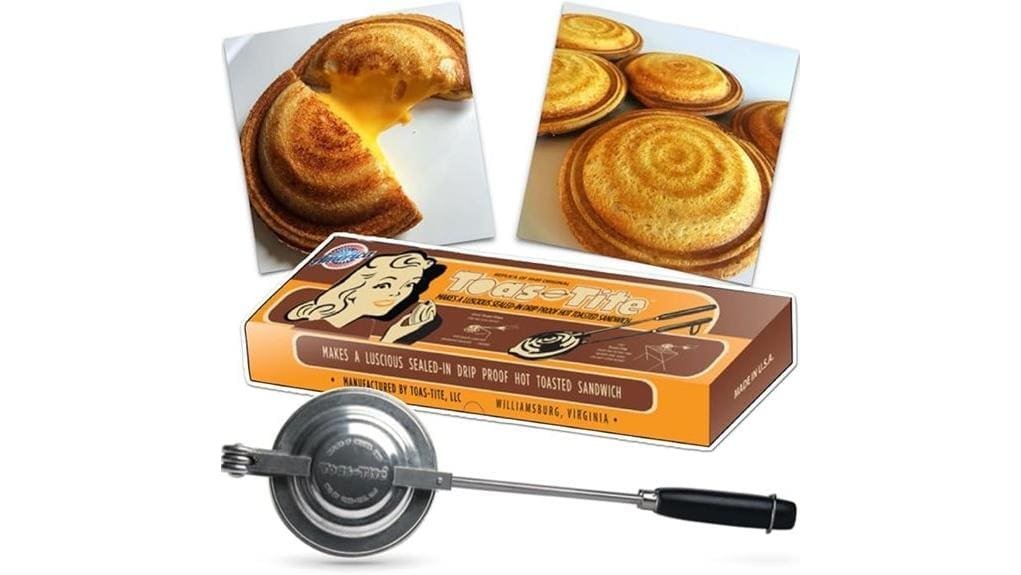
You’ll like the Toas-Tite if you want a rugged, retro handheld sandwich maker that seals and toasts reliably on stoves, grills, or campfires. It’s cast-aluminum and heftier than flimsy clamshell presses, giving even browning when you preheat and flip properly. It’s hands-on — you’ll trade electric convenience for control and a short learning curve — and it’s great for camping or gifting. Keep going to see cooking tips, pros and cons, and maintenance advice.
Some Key Takeaways
- Durable cast-aluminum build yields even browning and outlasts flimsy clamshell presses.
- Sealed-edge plates create pocketed toasted sandwiches and paninis when not overfilled.
- Works on stoves, grills, and campfires, but requires manual flipping and heat attention.
- Lightweight (~1.1 lb) with steel rods and hardwood handles—portable and tactile for camping.
- Needs preheating, light oiling, and prompt gentle cleaning to maintain performance and finish.
Quick Verdict: Should You Buy the Toas-Tite Handheld Sandwich Maker?
If you want a simple, portable way to make sealed toasted sandwiches and paninis at home or outdoors, the Toas-Tite Handheld Sandwich Maker is worth buying—its solid cast-aluminum build, nostalgic design, and ability to work on stoves, grills, and campfires give it clear advantages over flimsy sandwich presses and disposable options, though you’ll trade convenience features like nonstick electric operation for hands-on flipping and a learning curve. You’ll get durable, retro appeal that matches nostalgia marketing and practical performance. For group cooks or gift occasions, it unites skill-building, shared moments, and reliable results better than novelty single-use alternatives. It also complements outdoor cooking setups by pairing well with camping spice kits to enhance grilled sandwiches during trips.
What the Toas-Tite Is and How It Works (Features, Materials, Specs)
Because it’s fundamentally a retro, handheld cast‑aluminum pie iron reimagined for modern kitchens and campsites, the Toas‑Tite delivers a durable, no‑frills way to make sealed toasted sandwiches and paninis that’s more robust than cheap clamshell presses. You get cast aluminum plates, steel rods, and hardwood handles—simple parts rooted in vintage manufacturing that feel communal and trustworthy. Its sealed‑edge design locks fillings; thermal conductivity of the heavy plates cooks evenly on stovetops, grills, or campfires. At 1.1 pounds and compact dimensions, it’s portable yet substantial. You’ll appreciate the tactile control, classic aesthetic, and straightforward specs over trendy electric gadgets. It’s particularly well suited for outdoor cooks who use cast iron grill pans and other durable cookware when grilling or camping.
Real-World Cooking Tests: Sandwiches, Paninis, Desserts, and Campfire Use
Having covered what the Toas‑Tite is, let’s put it to work with real recipes to see how it performs on sandwiches, paninis, desserts, and over a campfire. You’ll find grilled cheese and paninis crisp evenly if you preheat and flip—better than many stovetop presses. Desserts like fruit pies and s’mores seal neatly, though you’ll dodge beginner mistakes by not overfilling. Outdoors, it shines: use coals for steady heat and follow campfire etiquette—keep flames low, share space, and clean before packing. Overall, it’s reliable, forgiving, and invites shared cooking moments with friends and family. It’s also a great companion for those who enjoy outdoor cooking and grilling, especially when paired with chicken roasters for outdoor cooking and other gear.
Pros, Cons, and Who This Retro Sandwich Maker Is Best For
While it looks like a simple throwback gadget, the Toas‑Tite delivers a surprisingly versatile and reliable cooking experience that beats many modern handheld presses on evenness and portability. Pros: durable cast‑aluminum build, sealed‑edge pockets, works on stoves or campfires, lightweight for travel, and excellent nostalgic gifting value that brings generations together. Cons: manual flipping requires attention, learning curve for heat control, no nonstick guarantee without oiling. Who it’s best for: you who want a communal, hands‑on cooker for family bonding, campers, nostalgic cooks, and anyone valuing durable, analog tools over electric conveniences. It’s a great match for outdoor cooks who prioritize compact gear and practical camping utensils.
How to Use and Maintain Your Toas-Tite for Best Results (Tips, Recipes, and Safety)
If you want consistent, tasty results from your Toas‑Tite, focus on heat control, prep, and regular care—these three factors matter more than fancy techniques. Preheat on medium, spray the cast aluminum lightly, and don’t overfill so seams seal; you’ll get even browning compared with random high-heat attempts. Clean promptly with warm water and a soft brush; gentle cleaning techniques preserve the finish. For safety, use hardwood handles and gloves near open flame. Try classic grilled cheese, fruit pies, or s’mores—simple recipes reward restraint. Store dry; smart storage solutions like hanging hooks keep it ready and shared. Consider pairing your Toas‑Tite with compact camping cookware for easy outdoor cooking and grilling.
Some Questions Answered
Does It Come With Replacement Parts or Extra Handles?
No, it doesn’t include replacement handles or spare hinges in the box. You’ll get the handheld cooker with its original hardwood handles and cast-aluminum body, but spare parts aren’t bundled. If you want extra durability or backup pieces, you’ll need to contact Toas-Tite for warranty support or purchase replacement handles and spare hinges separately. You’ll appreciate having options, and joining other users who proactively source parts keeps your gear cooking longer.
Is There a Warranty Registration Process?
Yes — you’ve got a limited warranty; warranty duration is modest, so register to secure coverage. Registration steps are straightforward: visit the manufacturer’s warranty/support link, fill in product details and your contact info, and submit proof of purchase. You’ll appreciate the clarity compared to vague warranties elsewhere. You’ll feel included in a small community of owners when you register, and it makes claims smoother if you ever need service.
Can It Be Used in Commercial/Restaurant Settings?
You can use it in limited restaurant testing, but it’s not ideal for regular commercial service. You’ll find the cast aluminum unit handy for pop-up demos, taste tests, or staff trials, yet it’s slower and manual compared with commercial presses. For health inspections you’ll need to prove safe cleaning and temperature control; many inspectors prefer NSF-rated equipment. If you want belonging on a team, treat this as a specialty tool, not primary gear.
Are There Dishwasher-Safe Components?
No — there aren’t dishwasher-safe components; you’ll hand-wash the cast aluminum plates and hardwood handles. For cleaning tips, wipe cooled surfaces with a soft cloth, mild soap, and avoid soaking the wooden handles. Compare to modern nonstick models, this needs gentler care but lasts longer with good upkeep. Set a maintenance schedule: clean after each use, oil wooden handles monthly, and inspect seams quarterly so your group can keep using it together.
Is Nonstick Spray Required Before Every Use?
You don’t have to use nonstick spray before every use, but you’ll likely want to for best release and to preserve coating longevity. Compared to skipping it, a light spray reduces sticking and cleanup; alternatives like butter, oil, or parchment work too but alter flavor or convenience. If you’re cooking frequently, rotate sprays with oil rubs to extend the finish. You’ll feel part of a practical, caring cook community.