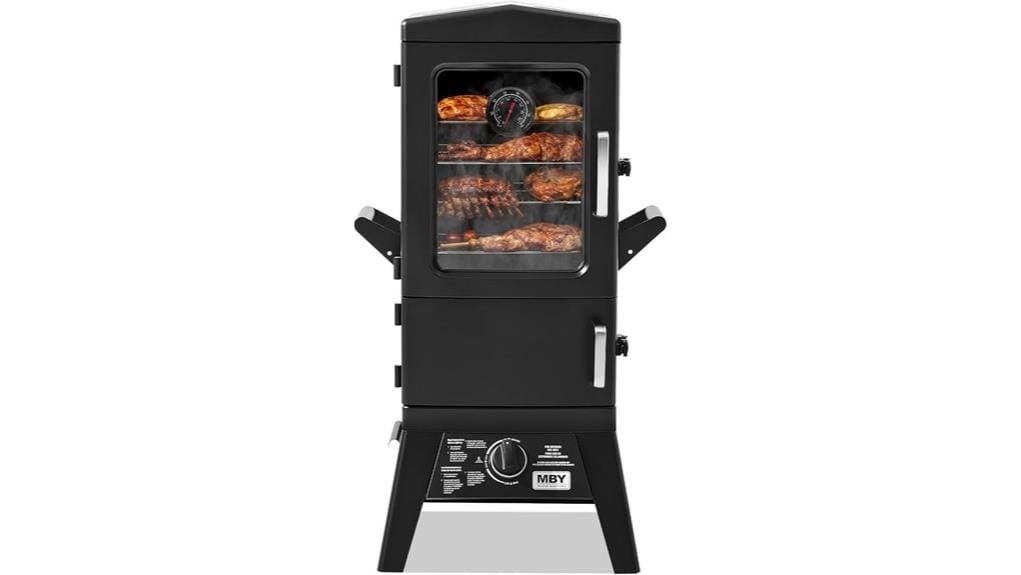
You’ll get precise, steady heat and even smoke circulation from this large vertical propane smoker, so you can control low‑and‑slow cooks or higher‑temp sears with confidence. Calibrated gauge and adjustable vents let you monitor burner output while vertical airflow promotes uniform color and moisture. Four adjustable chrome shelves fit briskets, racks, and sheet pans without crowding. Durable steel body, snug gasket, and cover resist weather. Keep going to see setup tips, load strategy, and fuel advice.
Some Key Takeaways
- Built-in adjustable temperature control and calibrated gauge deliver steady, predictable heat for low‑and‑slow or higher-temp smoking.
- Vertical layout and four adjustable chrome-coated shelves provide even airflow and accommodate briskets, ribs, sheet pans, and tall roasts.
- Heavy‑duty steel shell, solid welds, snug door gasket, and weather cover resist corrosion and moisture for outdoor durability.
- Clear startup and vent calibration guidance plus propane regulator pairing maintain consistent 225–275°F and prevent mid-smoke outages.
- Recommended for budget‑minded urban cooks, RVers, and weekend hosts seeking reliable, compact, community-friendly smoking performance.
How This Vertical Propane Smoker Performs: Temperature Control, Heat Distribution, and Cooking Results
Although you set the dial and walk away, the vertical propane smoker’s built-in adjustable temperature control actively maintains steady heat, letting you dial in low-and-slow ranges for brisket or higher temps for quicker cooks. You monitor temperature precision via the calibrated gauge; small adjustments alter burner output predictably. The vertical layout encourages consistent airflow patterns, moving heat upward and around racks for uniform color and moisture retention. You sense minimal hotspots during probes, and smoke contact is even across surfaces. The result: repeatable textures and flavors that let you share techniques and meals with a welcoming crew. For reliable outdoor cooking and safe fuel delivery, pairing the smoker with a properly selected RV propane regulator helps maintain consistent pressure and performance.
Capacity and Shelving Tested: How Much You Can Smoke at Once and Rack Configuration Tips
When you load this vertical propane smoker, its four chrome-coated, height-adjustable shelves let you organize large cuts and multiple trays without crowding so hot air and smoke can circulate evenly. You’ll fit briskets upright, racks of ribs, or sheet pans; measured rack spacing lets you place tall roasts without blocking airflow. Sensory cues—steady smoke, even bark formation, uniform color—confirm proper loading. For group cooks, plan meal planning around shelf real estate: prioritize larger pieces low, smaller items high for consistent temps. The removable shelves simplify rearrangement mid-smoke, helping you share techniques and results with fellow enthusiasts. For those who enjoy outdoor cooking and grilling, consider how different campfire grate setups can complement your smoker by improving airflow and versatility with grate configurations.
Build Quality, Weather Protection, and Long‑Term Durability
Because the smoker’s shell uses heavy-duty steel and a high-temperature, rust-resistant finish, you can expect a sturdy, weather-ready enclosure that resists chipping and corrosion under regular outdoor use. You’ll notice solid weld integrity at seams and mounting points; clean, continuous beads minimize flex and crevice corrosion. The finish resilience shows in tactile resistance to abrasion and a matte sheen that sheds water. A snug door gasket plus supplied weather cover cut moisture intrusion, preserving internal components. Over seasons, inspect welds for hairline fatigue and touch up surface chips to maintain structural soundness and communal pride in your gear. A properly fitted cover designed for outdoor cooking equipment will further protect your smoker from the elements and extend its service life by reducing exposure to moisture and UV weather protection.
Using a Propane Vertical Smoker: Setup, Fuel Use, and Best Practices for Low‑and‑Slow Smoking
If you’re setting up a propane vertical smoker, start by positioning it on a level, non-combustible surface with at least a few feet of clearance on all sides and the regulator and hose routed without kinks. Follow a strict startup checklist: inspect fittings, confirm propane safety, light per manual, and stabilize temperature. Calibrate vents and built-in controls to achieve steady 225–275°F for low-and-slow cooking. Choose wood selection to match protein; fruitwoods soften, hickory intensifies. Monitor smoke profiles—thin blue smoke signals good combustion, thick white means creosote risk. You’ll develop rhythms that yield consistent, evenly smoked results. Also, install a reliable propane gauge to track fuel levels and avoid mid-smoke outages.
Who Should Buy This Smoker? Uses, Alternatives, and Final Verdict
Although compact compared with full-sized pits, this vertical propane smoker gives you precise temperature control, even heat distribution, and enough rack space to handle brisket flat, racks of ribs, or multiple chickens for a crowd, so you’ll want it if you value consistent low‑and‑slow results with minimal fuss. You’ll appreciate the tactile feedback of steady heat and moist, smoky aromas. Ideal for budget shoppers and urban cooks with limited space, it suits weekend hosts, tailgaters, and campers. Alternatives include charcoal or electric smokers for different flavor profiles or portability. Verdict: practical, durable, and community-friendly—reliable for shared meals. It’s a great match for RVers and outdoor cooks who need compact, dependable gear and accessories like RV grilling equipment to optimize their setup.
Some Questions Answered
Can I Convert This Propane Smoker to Natural Gas?
Yes — you can usually convert it, but you’ll need a proper gas conversion kit and to verify regulator compatibility. You’ll feel confident tightening fittings, swapping jets, and adjusting pressure to get steady, even heat. Follow manufacturer specs or hire a certified tech so seals, valve seats, and flow match natural gas. That keeps performance predictable and safe, and helps you belong to the community of informed grill owners.
Are Replacement Parts and Accessories Readily Available?
Yes — you’ll find spare components and accessory compatibility broadly available. You’ll notice durable replacement racks, burners, valves and gaskets that match common fittings; smell of warm metal reassures fit and function. Manufacturers and third-party vendors list compatible shelves, covers and probes; you’ll feel confident swapping parts. Check model numbers and thread sizes to make certain proper matches, and join owner forums to share tips and sourcing leads with fellow enthusiasts.
How Loud Is the Smoker During Operation?
You’ll hear a low hum; the noise level is modest and won’t dominate outdoor conversation. You’ll sense steady motor vibration when the fan or rotisserie runs, but it’s usually subtle and predictable. Technically, sound peaks during ignition and fan acceleration, then stabilizes. You’ll feel gentle resonance through nearby surfaces, not harsh rattling. You’ll fit right into group settings, enjoying consistent smoking without intrusive noise disrupting gatherings.
Does It Require Any Seasoning or Initial Burn-In Process?
Yes — you should perform an initial burn-in and light seasoning. You’ll run the smoker empty at high heat for 30–60 minutes to burn off manufacturing residues, then coat racks with oil and smoke low-and-slow to build a protective patina. Follow maintenance tips: clean grates, check seals, and wipe grease. Observe safety precautions: ventilate, monitor propane connections, and never leave it unattended. You’ll appreciate the improved flavor and longevity.
Is Assembly Possible Without Professional Help?
Yes — you can assemble it yourself. You’ll follow easy assembly, stepwise instructions that guide each connection, bolt and gasket with clear diagrams. You’ll feel the metal parts align, hear fasteners seat, and notice progressive stability as shelves and burner mount. The process is technical yet accessible; you’ll gain confidence working with included tools and parts. You’ll join a community of owners who value hands-on setup and shared tips.