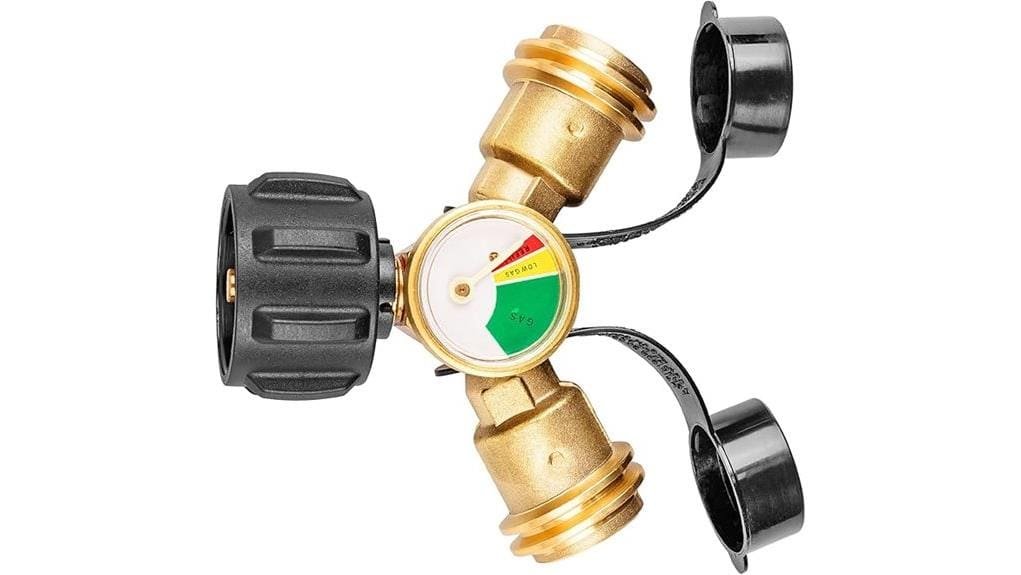
You’ll get a compact brass manifold that splits one propane tank into two independently shutoff outlets, with a color gauge for quick fuel checks. Installation is tool‑free: hand‑thread the inlet, attach hoses, verify seals, then open the tank slowly and exercise each valve. Gauge colors guide swaps but aren’t precise; test for leaks and check thread/regulator compatibility. It’s ideal for dual grills or heaters but watch high‑BTU draw limits—keep reading for full pros, cons, and alternatives.
Some Key Takeaways
- Confirms whether the splitter reliably feeds two appliances while maintaining adequate pressure under typical simultaneous loads.
- Notes build quality: solid brass body, durable valves, and potential dezincification or wear points to inspect.
- Evaluates gauge accuracy and usefulness, highlighting color-coded guidance and factors that affect readings.
- Describes installation ease: tool-free hand-threading, quick-disconnects, and recommended leak-test procedures.
- Flags limitations: thread compatibility, possible pressure drop at high BTU draw, and when to choose twin-tank alternatives.
What a Propane Tank Splitter With Gauge Actually Does
When you attach a propane tank splitter with a gauge, it divides one tank’s supply into two independent outlets while letting you monitor fuel at a glance. You get a compact brass manifold that routes gas to two appliances, using built-in shut-off valves to isolate each branch. You evaluate performance by checking pressure regulation and flow balancing under load; consistent output prevents flame instability on stoves or heaters. Installation’s tool-free and the gauge helps team users coordinate refills. You’ll trust the durable fittings and valve seats for secure connections, knowing the device supports shared outdoor cooking and heating setups reliably. Proper installation and routine checks, like monitoring propane gauge tips, improve safety and performance.
How to Tell Gauge Readings and What Green/Yellow/Red Mean
Having confirmed the splitter delivers steady flow to two appliances and that its shut-offs operate reliably, you’ll rely on the gauge to manage run time and avoid unexpected outages. Read the color-coded dial: green means ample gas, yellow signals roughly 10–15 minutes left, red indicates empty. Account for color calibration tolerances and needle lag; tap the gauge gently if readings seem stuck. Adjust expectations for ambient temperature, which can thin vapor pressure and shift readings, and for pressure spikes when appliances cycle on. Treat the gauge as a guideline, not an absolute; plan swaps before yellow to stay safe and connected. Check compatibility with your propane adapters to ensure safe, efficient connections.
Installation and Tool‑Free Setup for Two Appliances
Because you’re connecting two appliances to one tank, a clean, tool‑free installation matters for safety and performance: align the splitter’s brass inlet with the tank valve, hand‑thread until snug, then attach each hose to its branch fitting and tighten by hand until seated. You’ll benefit from quick disconnects for fast appliance swaps and minimal fumbling. Verify seals visually and with simple leak detection solution—bubbles indicate trouble. Open the tank slowly, exercise each built‑in shut‑off, and confirm independent flow control. The process is deliberate, efficient, and repeatable; it lets you join a community of users who expect reliable, straightforward setup. Many outdoor cooks choose a propane splitter to run multiple grills or accessories from a single tank.
Safety, Materials, and Compatibility Checklist (Brass Fittings, Valves, Thread Types)
Although the splitter looks simple, you should verify materials, valve ratings, and thread compatibility before each use to prevent leaks or failures. Inspect brass fittings for wear and signs of material corrosion; brass resists rust but can dezincify in harsh environments. Confirm the built‑in shutoff valve seats and torque ratings match appliance pressure specs. Check thread compatibility: common POL, ACME, and 1/4″ flare differ—use correct adapters if needed. Test seals with soapy water after installation and tighten to manufacturer torque. Replace any component with visible damage. Follow these checks every season to keep your setup safe and reliable. Consider also matching the splitter to your propane tank size and regulator capacity to ensure proper pressure delivery and safe operation.
When to Buy One: Use Cases, Limitations, and Best Alternatives
If you want to run two propane appliances from a single tank without swapping hoses, a propane tank splitter is a straightforward, cost‑effective option that saves time and reduces setup clutter. You’ll buy one for camping convenience, backyard dual-grill setups, patio heaters, or temporary commercial kitchens that need simple split flow. Limitations: pressure drop under simultaneous high-BTU draw, incompatible thread types, and outdoor-only rating. Gauge aids fuel awareness but doesn’t replace flow calculations. Alternatives: dedicated twin-tank regulators, manifold systems with certified fittings, or individual tanks per appliance for continuous high-demand use. Choose based on load, safety, and certification needs. For many users, matching the splitter to your RV or grill fittings and ensuring proper certification is key to safe operation.
Some Questions Answered
Can I Leave the Splitter Connected During Long-Term Tank Storage?
You shouldn’t. Leaving the splitter connected during long-term tank storage raises risk of long term corrosion at fittings and can prevent proper pressure equalization, so you’ll want to disconnect it. For shared safety, drain residual pressure, close built-in shut-off valves, cap threads, and store brass parts dry. You’ll prolong service life and reduce leak risk while keeping the group’s gear dependable and ready when you reconnect.
Does the Gauge Require Calibration or Battery Power?
No — the gauge uses a battery free design and doesn’t need power. You won’t perform a regular calibration procedure; it’s mechanical and factory-set. Still, you should verify accuracy by comparing readings to a known tank level occasionally. If readings drift or the dial sticks, replace the splitter rather than attempt user recalibration. You’ll feel confident sharing it with friends knowing it’s low-maintenance, robust, and built for reliable outdoor use.
Will the Splitter Fit Non-Standard or International Propane Tanks?
Generally no — you’ll need to check adapter compatibility and valve dimensions before assuming a fit. The splitter’s valve dimensions match standard U.S. POL/ACME fittings; non-standard or international tanks often use different threads or regulators. You can use an appropriate adapter, but you’ll want to verify thread type, seal compatibility, and pressure ratings. Join other users by confirming specs and testing carefully outdoors to guarantee a secure, leak-free connection.
Can I Use an Inline Regulator With This Splitter?
Yes — you can use an inline regulator with this splitter, but you’ll need to match regulator outlet pressure and thread fittings. You’ll install the inline regulator between the tank and splitter to guarantee correct pressure balancing across both branches. That prevents uneven flow when two appliances run. Choose a regulator rated for your devices, confirm compatible connectors, and test for leaks. You’ll feel assured knowing the setup stays safe and stable.
How Do I Winterize or Protect the Gauge From Freezing?
You’ll prevent gauge freezing by insulating wrap and, in extreme cold, placing the splitter in a heated enclosure. Use closed-cell insulating wrap around the gauge and fittings, securing with weatherproof tape, and add a small thermostatically controlled heater or heat pack in a ventilated heated enclosure for prolonged exposure. Test gauge function after warming. This approach’s technical reliability gives you confidence and keeps the setup safe and shared among your group.