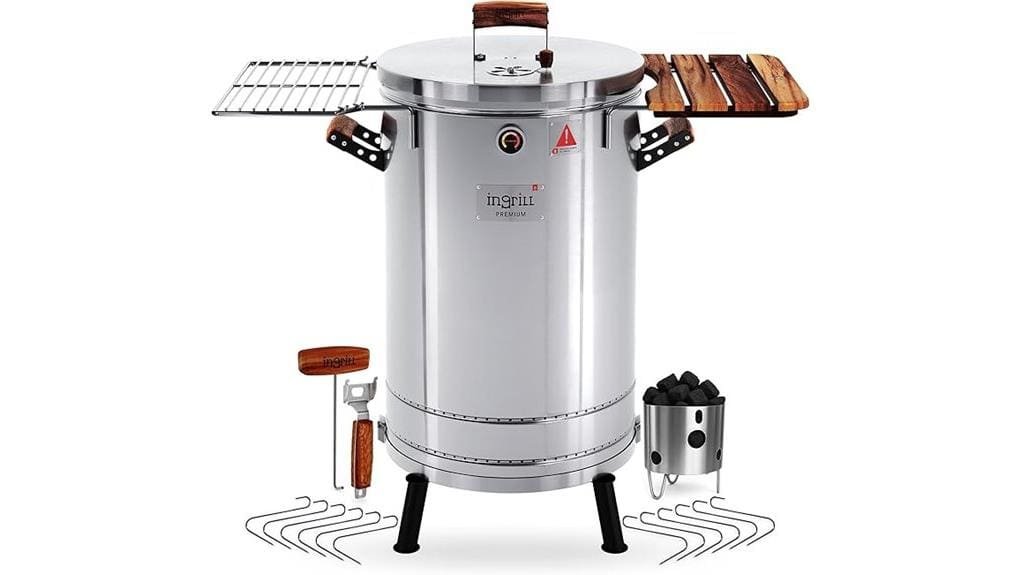
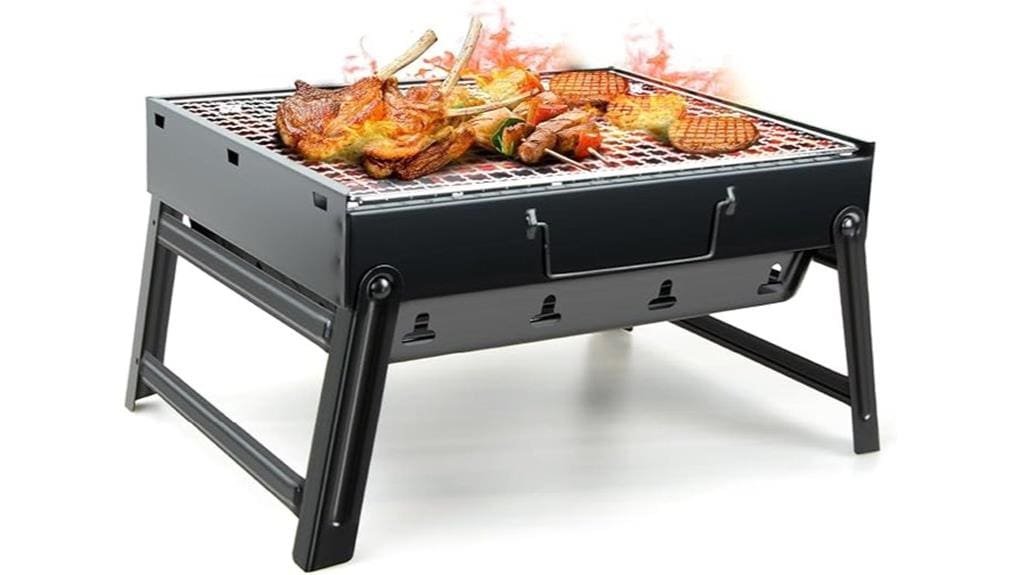
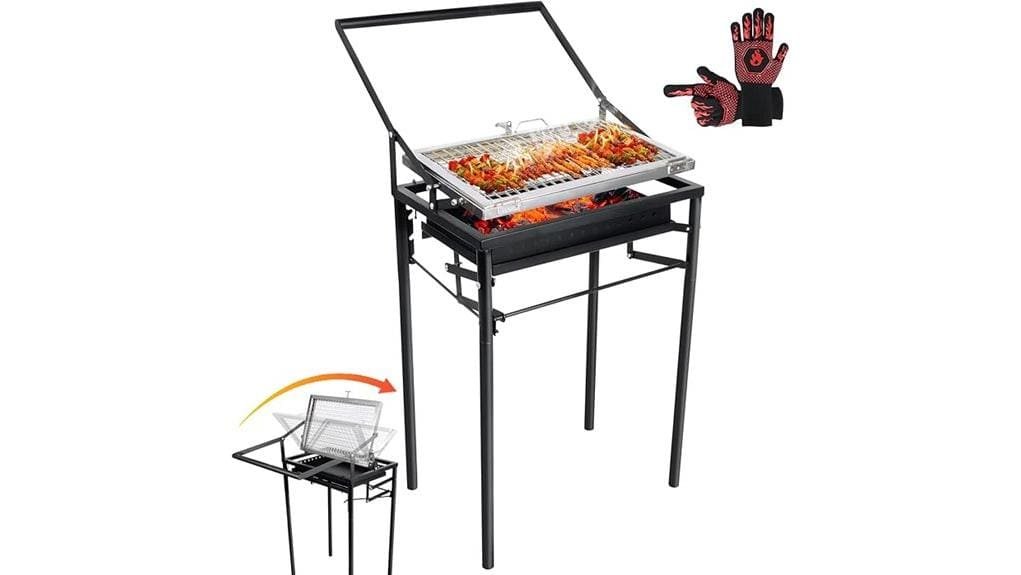
You’ll get a compact, travel-ready 304 stainless charcoal barrel that’s light and corrosion-resistant, with tool-free assembly, two racks, oil pan and 20 skewers. Its sealed oil pan traps grease to cut flare-ups and visible smoke during short burns, while a 360° cavity gives even sears; lump charcoal lights faster, briquettes hold longer. Wind and pan alignment can cause leaks, so expect simple upkeep. Keep going for full test notes, tips and buying alternatives.
Some Key Takeaways
- Compact 304 stainless steel design offers corrosion resistance, portability, and a lightweight 5.7 lb shell ideal for travel and camping.
- Sealed oil pan separates fat from charcoal, reducing flare-ups and visible smoke when filled with water and properly aligned.
- 360° cavity provides even heat distribution for consistent searing and roasting; temperature controlled by charcoal amount and rack height.
- Quick assembly without tools, easy teardown, and simple cleaning—empty residues, rinse components, and use a cover for protection.
- Wind sensitivity, potential oil-pan leaks if misaligned, and higher upfront price compared with sheet-metal options are notable drawbacks.
Quick Verdict : Who the RIIGOOG Smokeless Charcoal Grill Is For
If you want a compact, travel-ready charcoal grill that cuts smoke and handles grease cleanly, the RIIGOOG Smokeless Charcoal Grill is for you. You’ll appreciate its 304 stainless build, low weight, and sealed oil pan design that separates fat from charcoal—less flare-ups, fewer fumes. Compared to bulky pits, it fits travel, beach, patio, and camp setups, supporting simple camping recipes and quick sears with 360° heat reflection. You’ll join other pragmatic outdoor cooks who value portability and predictable results. User maintenance is straightforward: add water to the oil pan, empty residues, and rinse components for reliable, communal use. A quality grill cover can help protect the grill from weather and extend its lifespan.
What’s in the Box and Key Specs (Size, Weight, Materials, 20 Skewers)
Because it’s built for travel and quick setup, the box contains the RIIGOOG Stainless Smokeless Charcoal Barrel Grill (assembled into a compact, free‑standing unit), two stainless racks, an oil pan, a charcoal chamber, a lid/outer barrel, a stainless handle/frame, and 20 grilling skewers—plus basic hardware and an instruction sheet. You get a 10.24 x 10.24 x 16.14 inch, 2.59 kg (5.69 lb) 304 stainless unit designed for portability and corrosion resistance. Assembly tips in the manual are brief; parts slot together without tools. The included cleaning guide explains oil‑pan water use and simple stainless maintenance for a shared outdoor gear community. The design reflects principles of charcoal chimney airflow to improve lighting and reduce smoke.
Real-World Performance Tests : Setup, Smokeless Claim, Heat Distribution, and Cooking Results
Now that you know what comes in the box, it’s time to put the RIIGOOG grill through real‑world use to verify setup simplicity, the smokeless claim, heat distribution, and cooking outcomes. You’ll face minor setup challenges—aligning racks and oil pan—but instructions are clear and community tips help. Try lump charcoal and briquettes for comparative fuel choices; lump lights faster, briquettes hold steady. For smoke verification, run a 30‑minute burn with oil pan water per instructions; visible smoke was minimal versus open grate tests. Temperature control relies on charcoal amount and rack height; heat distribution proved even around the 360° cavity, producing consistent sear and roast. This hands‑on testing also highlighted best practices for charcoal care and storage to extend briquette life and performance charcoal care.
Practical Pros and Cons : Portability, Oil Pan Usage, Durability, and Outdoor Limitations
While the RIIGOOG excels at light, portable charcoal grilling—you can toss it in a car and set up fast—the tradeoffs are worth noting: the grill’s 5.7 lb stainless‑steel shell and compact footprint make transport and storage easy, but the required oil pan (which needs one‑third water every session) adds handling steps and a leak risk if misaligned. You’ll appreciate camping convenience and quick teardown, yet wind sensitivity can affect flame stability and smoke escape. Follow maintenance tips: check pan seals, clean drip channels, tighten fasteners with basic assembly tools. Durability is good; treat joints gently and avoid prolonged salt exposure. Its compact design and lightweight build make it ideal for portable charcoal grills enthusiasts who value easy transport and setup.
Should You Buy It? Price Considerations, Alternatives, and Final Buying Recommendation
Having covered portability, oil‑pan handling, and durability, let’s look at whether the RIIGOOG makes sense for your budget and use cases. You’ll find the upfront cost sits mid‑range for stainless portable grills; a quick price comparison with lightweight steel alternatives shows savings in corrosion resistance but higher initial spend. Factor in long term maintenance—minimal with 304 stainless and a removable oil pan—so lifecycle cost trends favorable if you use it often. Alternatives: cheaper sheet‑metal barrels or premium cast‑iron units. Recommendation: buy if you value low maintenance, portability, and smokeless performance; otherwise choose a cheaper basic model. If you frequently grill with lump charcoal, consider its impact on flavor and heat control for outdoor cooking.
Some Questions Answered
Does the Grill Come With a Carrying Case or Travel Bag?
No — it doesn’t include a carrying case or travel bag. You get the portable grill and 20 skewers, but no portable pouch or travel cover is supplied. You’ll want to compare aftermarket options: a snug portable pouch or weatherproof travel cover adds protection and easier transport. If you value belonging to a kit, pick a case that matches the grill’s dimensions and stainless profile so you and your gear feel prepared and united on every outing.
Can I Use Lump Charcoal, Briquettes, or Wood Chips?
Yes — you can use lump charcoal, briquettes vs lump charcoal offers different heat profiles: lump lights faster, burns hotter and cleaner; briquettes burn more consistently and longer. Use wood chips for added smoke flavor, but keep amounts small and place them where they won’t contact charcoal directly to preserve the smokeless design. You’ll want to monitor heat and add water to the oil pan as specified to maintain performance and community-friendly use.
Is Any Seasoning or Protective Coating Applied to the Stainless Steel?
No, the stainless steel hasn’t got a cooking-seasoning or protective coating applied; it relies on food-grade 304 material and surface treatment from manufacture. You’ll notice consistent manufacturing tolerances and a clean, integrally formed finish that resists corrosion and high heat. Compared to coated grills, this one won’t flake or off-gas; you’ll want to passivate or lightly oil hot surfaces for aesthetics and extra protection, joining others who prefer minimal, durable maintenance.
Are Replacement Parts (Racks, Skewers, Oil Pan) Available Separately?
Yes — you can get replacement racks, skewer sets, and oil pans separately through the seller or aftermarket suppliers. You’ll want OEM or compatible parts to maintain the smokeless oil-pan function and rack fit; generic pieces may alter airflow and performance. Compare materials (304 stainless vs plated steel) and dimensions before ordering. Join user groups or the seller’s community for verified sources and group-buy options to keep your grill performing reliably.
Can the Grill Be Used Safely on Wooden Decks or Picnic Tables?
Yes — you can, but you shouldn’t place it directly on wood. For deck safety and fire prevention, you’ll need a noncombustible surface or dedicated heat shielding beneath the unit and keep clearances for ventilation. Compare to ground use: add a metal or stone pad and protect nearby railings. You’ll belong to cautious grillers who use surface protection, stable placement, and a water-filled oil pan to minimize flare-ups and heat transfer.